Government Roles India Quietly Keeps Open for Diaspora Professionals — No Relocation Required
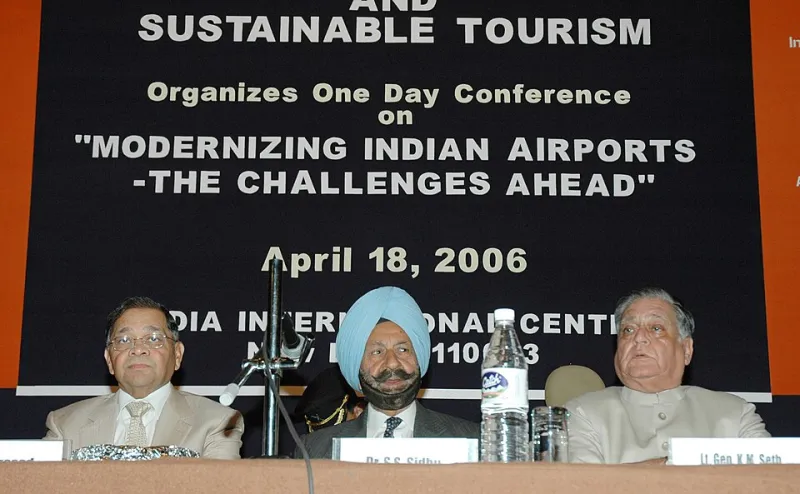
Photo: Ministry of Civil Aviation, GODL-India, via Wikimedia Commons
Most diaspora professionals operating in the United States assume that pursuing an Indian government career means choosing between two lives. Either you pack up, surrender your US residency, and commit fully to life in India — or you stay put and watch the opportunity pass. That assumption is costing qualified candidates real career options.
A quiet but growing set of government positions, advisory mandates, and specialized technical roles within India's public sector actively recruit non-resident Indian professionals. Some allow remote participation. Others involve periodic engagement rather than permanent posting. And a handful operate through autonomous bodies and public sector enterprises where the relocation requirement is either waived or structured around project cycles rather than continuous residence.
This is not a loophole. It is policy — and it is underutilized.
Why These Roles Exist and Why They Stay Hidden
India's push to modernize its administrative and technical infrastructure has created a genuine talent gap that domestic recruitment alone cannot fill. Ministries overseeing technology, finance, science, and external affairs have increasingly turned to diaspora professionals who carry international exposure alongside cultural and linguistic familiarity with India's institutional landscape.
The reason these openings rarely surface in mainstream job portals is structural. Many are classified under contractual, consultancy, or deputation frameworks rather than standard recruitment notifications. They appear on ministry websites, in gazette notifications, or through the websites of autonomous bodies — not through the consolidated UPSC or SSC portals most candidates monitor.
If you are not looking in the right places, you will not find them.
Departments and Bodies That Have Recruited NRI Professionals Without Full Relocation
Ministry of External Affairs — Public Diplomacy and Policy Roles
The MEA has periodically engaged diaspora professionals in advisory and research capacities, particularly for its public diplomacy division and think tank partnerships. These roles often involve project-based contracts with deliverables that can be managed across time zones, supplemented by visits to New Delhi during key policy cycles.
NITI Aayog — Consultancy and Research Engagements
NITI Aayog, India's premier policy institution, regularly issues calls for specialized consultants in areas including digital infrastructure, urban planning, climate finance, and health economics. Several of these engagements have been filled by India-origin professionals based in the US and Europe. The contracts are typically fixed-term, and while some require in-country presence during specific phases, they do not demand permanent relocation.
Department of Science and Technology — Overseas Visiting Scientist Scheme
The DST's Overseas Visiting Scientist Associateship programme is one of the most direct mechanisms for diaspora professionals in STEM fields. It allows NRI and OCI scientists to collaborate with Indian research institutions for defined periods — typically two to four months per year — while maintaining their primary affiliation abroad. Compensation is paid in Indian rupees at government-approved rates, and the engagement counts toward formal government research credentials.
Public Sector Undertakings — Board and Advisory Positions
Several central public sector enterprises, particularly in energy, telecommunications, and financial services, carry independent director or advisory board positions that are open to NRI professionals. These are formally governed positions with statutory responsibilities, yet they do not require the holder to resign foreign employment or establish Indian domicile.
Invest India and Trade Promotion Bodies
Invest India, the national investment promotion agency operating under the Ministry of Commerce, has engaged diaspora professionals in market development roles targeting the US corridor. Similar arrangements exist under EEPC India and the India Brand Equity Foundation. These roles are often structured as fixed-term contracts with a significant portion of work conducted from the professional's country of residence.
Eligibility Conditions Diaspora Candidates Frequently Misread
The eligibility frameworks governing these roles differ from standard civil service recruitment in important ways. Age relaxations are commonly available for NRI and OCI applicants. Domicile requirements are either absent or waived under contractual frameworks. Academic qualifications earned abroad are generally accepted, though equivalency certificates from the Association of Indian Universities may be required in some cases.
Nationality rules deserve careful attention. OCI cardholders are eligible for most advisory and contractual roles but remain excluded from specific categories including those touching on national security, defense, and certain constitutional positions. Candidates holding dual citizenship through a country that does not permit it under Indian law must resolve that status before applying.
Application Timelines and How to Track Them
The notification cycles for these roles do not follow the predictable calendars of UPSC or SSC examinations. Ministry websites, the Central Government Employment News, and the official portals of autonomous bodies like NITI Aayog and DST are the primary sources. Setting up keyword alerts for terms such as "NRI consultant," "diaspora professional," "overseas expert," and "visiting fellow" across these platforms will surface opportunities that general job search tools miss entirely.
Some engagements are also facilitated through the Indian diaspora networks maintained by the Ministry of Overseas Indian Affairs and organizations like the Global Indian Scientists and Technocrats network, which coordinates between government departments and NRI professionals in high-demand fields.
What Candidates in the US Should Do Before the Next Notification Drops
The professionals who successfully land these roles share one common preparation habit: they do not wait for a notification to start building their case. They keep their Indian credentials current, maintain professional relationships with Indian institutions, and ensure their documentation — OCI card, academic equivalency certificates, tax residency status — is in order before any application window opens.
For diaspora professionals in the US who have spent years watching Indian government careers from a distance, these pathways represent something genuinely different. They do not ask you to choose. They ask you to contribute — on terms that acknowledge where you are and value what you have built.